75 Years of Narendra Modiji : A Journey of Leadership and Legacy
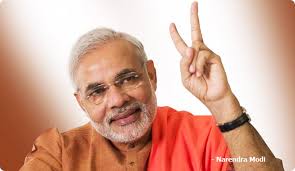
As India’s longest-serving Prime Minister after Jawaharlal Nehru, Narendra Modi’s 75-year journey is not just the story of one man but also a mirror of India’s transformation in the 21st century. From humble beginnings in Vadnagar, Gujarat, to becoming a global statesman, Modi’s life is often described as a testament to grit, conviction, and the power of democratic opportunity.
Early Life and Rise:
Born on 17 September 1950, Narendra Damodardas Modi grew up in a modest family, helping his father at a tea stall. His early years were marked by discipline, spirituality, and exposure to the Rashtriya Swayamsevak Sangh (RSS), which shaped his political thinking and organizational skills. Entering mainstream politics through the Bharatiya Janata Party (BJP), he rose rapidly, recognized for his strategic abilities and ability to connect with people at the grassroots.
Chief Minister of Gujarat (2001–2014)
As Chief Minister of Gujarat, Modi emphasized industrial growth, infrastructure development, and investment-friendly policies. His tenure saw both praise and criticism: lauded for economic growth and criticized for social strife. Nevertheless, his reputation as a decisive leader positioned him as a national figure.
Prime Minister of India (2014 onwards)
In 2014, Modi led the BJP to a historic electoral victory, ending decades of coalition politics. His governance style has been characterized by bold initiatives such as:
Economic Reforms: GST, Insolvency and Bankruptcy Code, Digital India, Startup India.
Welfare Schemes: Jan Dhan Yojana, Ayushman Bharat, Ujjwala Yojana, PM Awas Yojana, PMVIKAS etc.
Global Diplomacy: Transforming India’s image on the world stage, strengthening ties with major powers while emphasizing India’s civilizational identity.
Cultural and National Identity: Revocation of Article 370, construction of the Ram Mandir in Ayodhya, and a push for “Atmanirbhar Bharat.”
Global Statesman:
By his mid-70s, Modi had addressed the U.S. Congress twice, presided over the G20 Summit in Delhi, and established India as a key player in climate action, digital transformation, and global peace efforts. His ability to blend nationalism with internationalism made him one of the most recognizable leaders worldwide.
Challenges and Criticisms:
No legacy is without debate. Modi’s years in power have been marked by controversies over handling of social harmony, criticism of centralization of power, and concerns over democratic freedoms. Yet, his popularity among vast sections of the Indian electorate has remained unprecedented.
The Symbolism of 75:
At 75, Narendra Modi stands at a symbolic juncture:
For India, it reflects the aspirations of a nation looking toward its centenary of independence in 2047.
For Modi, it represents a lifetime dedicated to public life, navigating the complex balance between development, identity, and global leadership.
Legacy:
Whether one sees him as a reformer, a nationalist, or a polarizing figure, Narendra Modi’s imprint on India is undeniable. His journey from a tea-seller’s son to a two-term Prime Minister embodies the possibilities of democracy. As he enters his 75th year, India reflects on not just a leader, but an era shaped by his vision.
OBCs in India and Narendra Modi: A New Political and Social Equation:
The Other Backward Classes (OBCs) form one of the most significant social and political groups in India, comprising over 50 % of the population as per various estimates. Historically marginalized in terms of education, employment, and representation, OBCs became central to Indian politics after the Mandal Commission Report (1980s) and its implementation in the 1990s, which expanded reservations in jobs and education.
In this political landscape, Narendra Modi’s rise as the first Prime Minister of India from an OBC background has had both symbolic and practical implications for OBC empowerment.
The OBC Landscape in India:
Historical Context: OBCs have long been socially disadvantaged and economically constrained, though not as marginalized as Scheduled Castes (SCs) and Scheduled Tribes (STs).
Political Mobilization: Post-Mandal, regional parties like Samajwadi Party (UP), RJD (Bihar), and JD(U) mobilized OBCs as their primary vote base.
Economic Challenges: Despite affirmative action, many OBC communities—artisans, small farmers, and traditional occupations like goldsmiths, carpenters, weavers, blacksmiths—remain vulnerable in the modern economy.
Narendra Modi as an OBC Leader:
Narendra Modi was born in 1950 into the Modh Ghanchi (oil-pressers) community, recognized as an OBC in Gujarat. His OBC identity has influenced both his political narrative and his government’s outreach:
Symbolism: Modi’s rise to the highest office of India was historic—breaking the long-standing dominance of upper castes in Indian politics. For many OBC communities, this symbolized a new era of representation.
Political Strategy: Modi and the BJP redefined OBC politics by:
Expanding BJP’s appeal beyond upper castes to OBCs and non-dominant backward groups.
Targeting “non-Yadav OBCs” in UP and Bihar, who often felt excluded by regional caste-based parties.
Promoting OBC leaders within the BJP and government.
Policy Initiatives for OBCs:
Constitutional Status to OBC Commission (2018): Strengthened the National Commission for Backward Classes (NCBC).
Educational Reservations: Ensured OBC reservations in NEET medical exams and central educational institutions.
Economic Empowerment: Emphasis on Mudra loans, skill development, and artisan-support programs that disproportionately benefit OBCs.
Social Mobility Narrative: Modi often invokes his humble OBC background to inspire aspiration among backward communities.
Criticisms and Limitations:
Economic Inequality within OBCs: Benefits often cornered by “dominant OBCs,” leaving artisan and nomadic groups behind.
Reservation Ceiling: No substantial increase in job reservations despite rising OBC demands.
Privatization Concerns: As public sector jobs shrink, OBCs worry about losing the main channel of upward mobility.
The Modi Era and OBC Future:
Under Modi, OBC politics has shifted from regional caste coalitions to national integration within BJP’s Hindutva framework. While this has created greater OBC representation at the national level, the challenge remains: ensuring that marginalized artisan communities—goldsmiths, weavers, potters, carpenters—are not left behind in India’s race toward modernization.
Conclusion:
Narendra Modi’s journey as an OBC leader has reshaped the narrative of backward caste politics in India. His tenure has brought visibility, representation, and some institutional reforms for OBCs. Yet, the deeper challenge lies in inclusive economic empowerment, ensuring that every artisan, farmer, and worker from OBC backgrounds has access to education, technology, and fair opportunities.
As Modi turns 75, his legacy will be judged not only by his political victories but also by how effectively he has uplifted the vast OBC population that looks up to him as one of their own.
– Rajan P. Thodiyoor
State Media Convener, OBC Morcha, Kerala